Specialized Bachelor's
Degree Programs for a
Successful Technical Career
BE Civil Engineering
4 Years / 8 SemestersDesign, plan, and construct roads, bridges, houses, water supply systems, and critical infrastructure for Nepal. Gain the analytical skills and practical knowledge necessary to work on real engineering projects in urban and rural areas.
BE Information Technology
4 Years / 8 SemestersA comprehensive programme blending software engineering, networking, databases, and emerging technologies. Build the skills to design solutions for businesses, governments, and communities in a digital world.
Two focused programs,
built for modern careers
A quick snapshot of what each program is about—scannable, practical, and designed to help you choose fast.
BE – Information Technology
Build software systems, networks, and secure digital services. Learn to design and deliver real-world technology solutions.
BE – Civil Engineering
Plan, design, and manage infrastructure—roads, buildings, water systems, and more—using strong engineering fundamentals.
Academic & Extracurricular Excellence
How we deliver education and foster holistic development for our students.
Teaching Method
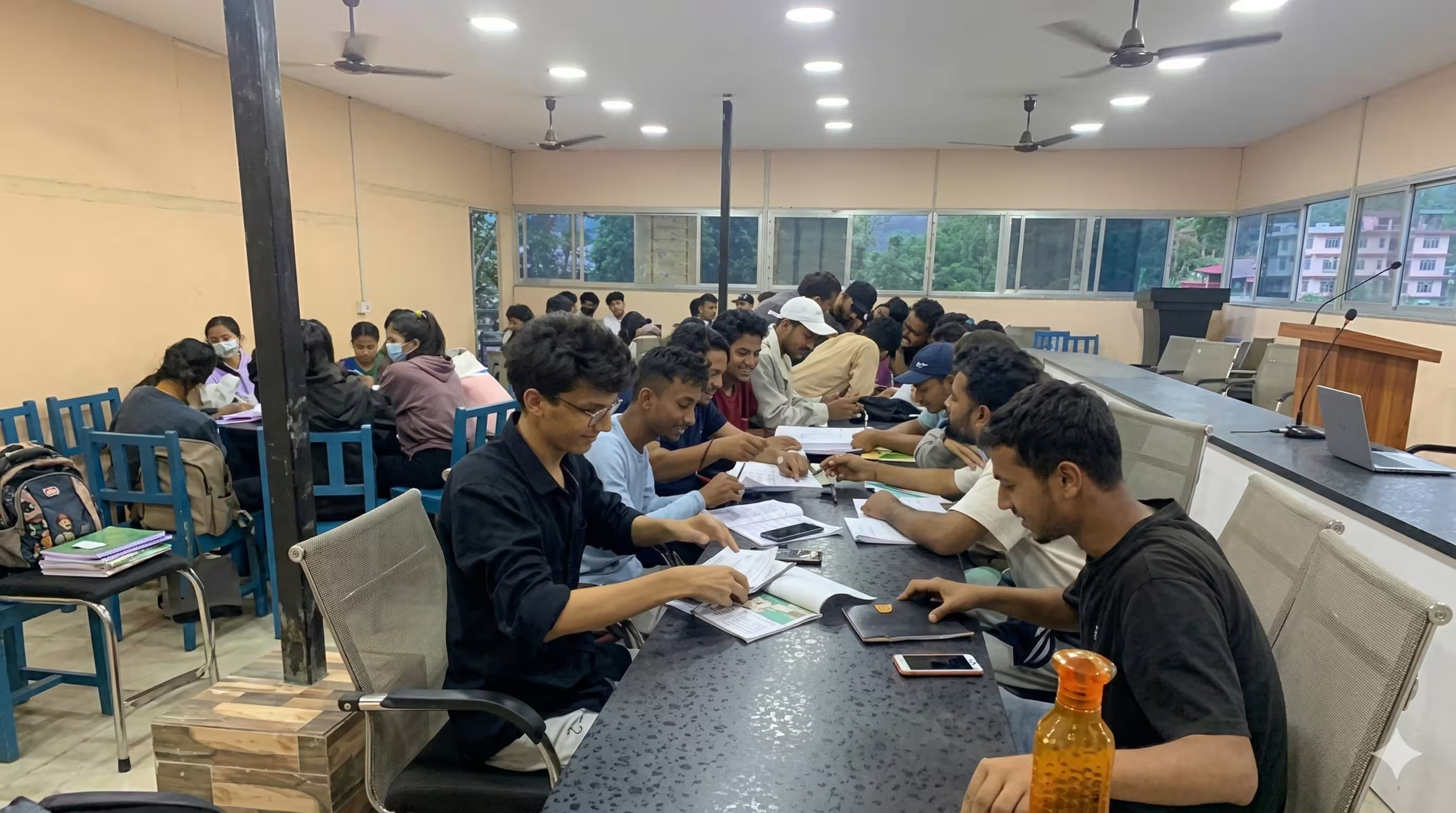
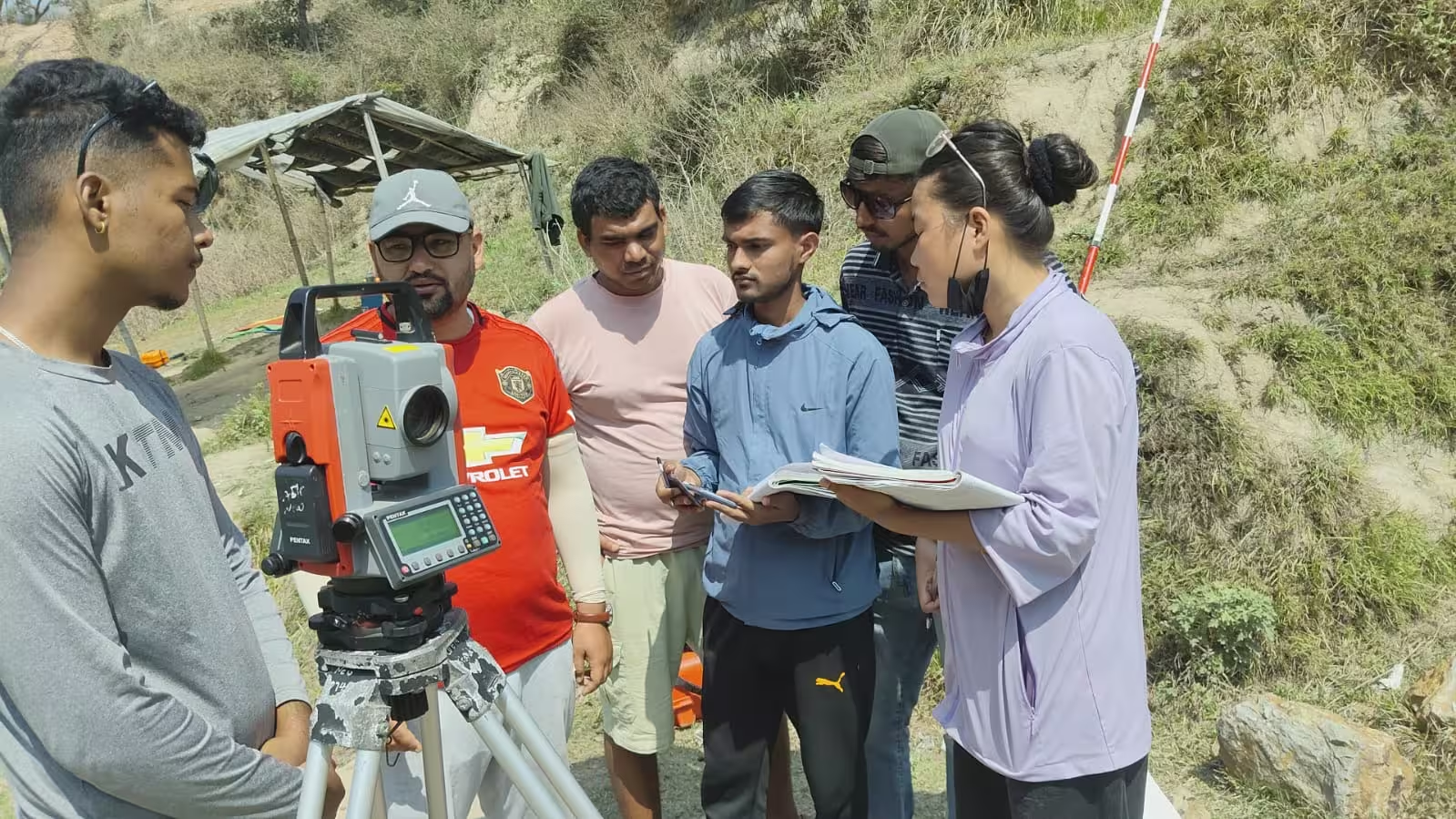
The teaching methodology adopted by the college incorporates a blend of lectures, class discussions and practical classes with classroom presentations, project works, audio-visual presentations, demonstrations and special talk programs, field work, case study internship, site-visits, assignments, seminars and other practical sessions. Periodic class tests, mid-terms and sent up examinations help students to be prepared for all sorts of evaluations.
Internship
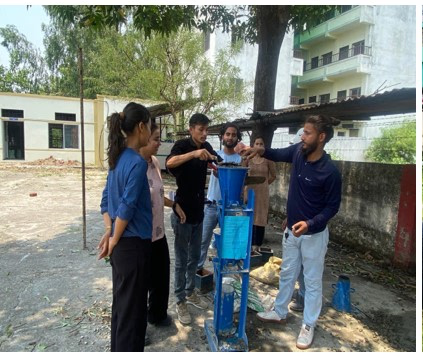
The BE Civil & BEIT Students are required to undertake an internship program approved by the program coordinator. Students are supervised by the faculty members. To promote opportunity to apply theoretical knowledge in real life situation the students must submit the internship report to the host institute and the University. Presentation in the institute is compulsory for each and every student.
Extra Curricular
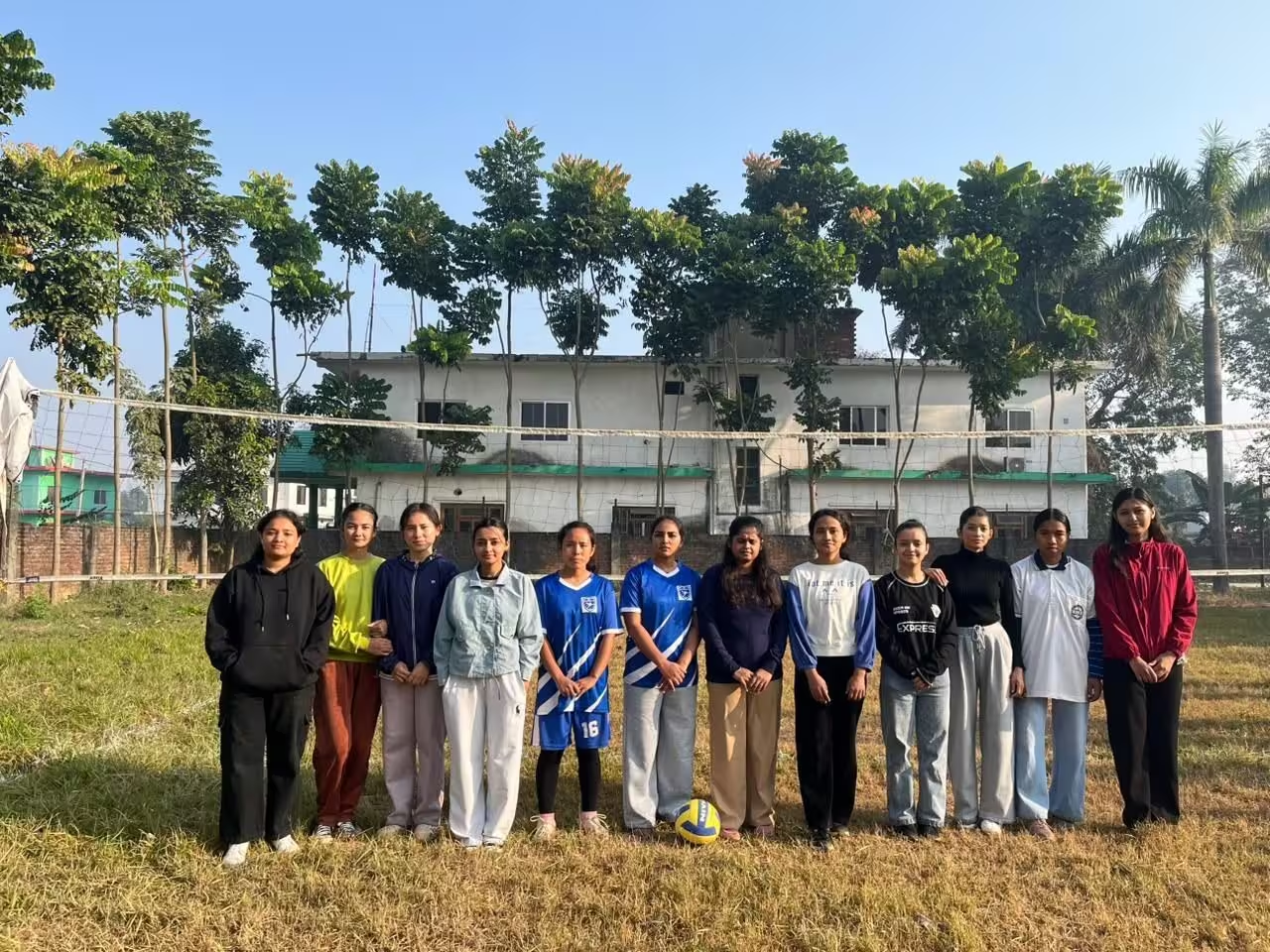
CoEM believes in the multifaceted development of its students. Along with the academic excellence it seeks to achieve the physical and mental development to make them lively, dynamic, vibrant, competent and confident in the competitive era of 21st century. For this, the college frequently organizes extracurricular and sports activities, with the strong belief that academic performance and the personality development enhances to make them successful.
Program details
A four-year program designed to prepare you for building, securing, and operating modern digital systems—across software, networks, and data.
Program duration
Typically completed in 4 years across 8 semesters, with steady progression from fundamentals to advanced systems and applied projects.
Key focus areas
- Software development & engineering
- Databases & data management
- Networking & system administration
- Web & application design
- Testing, quality, and deployment
- Secure information systems
Career outcomes
Program details
Civil engineering focuses on designing, building, and maintaining infrastructure that supports communities—across the public and private sectors.
Overview
Civil engineers plan, design, and supervise projects such as roads, buildings, bridges, dams, tunnels, airports, and water supply and sewage systems—balancing safety, cost, and sustainability.
Career scope
Graduates can enter civil and structural engineering professions in design, construction, research, and education. With further learning, pathways may include professional registration and chartered roles.
Objectives
Clear outcomes that guide the curriculum and student development—kept concise and easy to scan.
Prepare students with a solid foundation in mathematics, sciences, and technical skills to analyze and design civil infrastructure systems.
Build familiarity with current and emerging civil engineering issues, with an understanding of ethical and societal responsibilities.
Develop the ability to obtain professional licensure and recognize the importance of life‑long learning.
Equip students for employment in civil engineering and related professions, advanced studies, and eventual leadership roles.
Curriculum structure
Detailed semester-by-semester course breakdown. Use the tabs below to switch between different programs.
Year : I Semester I
| S.N. | Code | Subject | Cr | L | T | P |
|---|---|---|---|---|---|---|
| 1 | CHM 110 | Applied Chemistry | 2 | 2 | 1 | 2 |
| 2 | PHY 110 | Applied Physics | 3 | 3 | 1 | 2 |
| 3 | MTH 110 | Calculus I | 3 | 3 | 2 | 0 |
| 4 | CMP 112 | Computer Programming | 3 | 3 | 1 | 2 |
| 5 | MEC 112 | Engineering Drawing | 2 | 0 | 0 | 6 |
| 6 | MEC 113 | Applied Mechanics (Statics) | 2 | 2 | 2 | 0 |
| Sub-total | 15 | 13 | 7 | 12 | ||
Year : I Semester II
| S.N. | Code | Subject | Cr | L | T | P |
|---|---|---|---|---|---|---|
| 1 | MTH 150 | Algebra and Geometry | 3 | 3 | 2 | 0 |
| 2 | MEC 151 | Applied Mechanics (Dynamics) | 2 | 2 | 2 | 0 |
| 3 | ELE 112 | Basic Electrical and Electronics Engineering | 3 | 3 | 2 | 2 |
| 4 | CVL 110 | Civil Engineering Materials | 2 | 2 | 0 | 2 |
| 5 | CVL 112 | Civil Engineering Workshop | 1 | 0 | 0 | 3 |
| 6 | GTE 150 | Engineering Geology | 3 | 3 | 0 | 2 |
| 7 | MEC 114 | Introduction to Energy Engineering | 2 | 2 | 1 | 1 |
| Sub-total | 16 | 15 | 7 | 10 | ||
Year : II Semester III
| S.N. | Code | Subject | Cr | L | T | P |
|---|---|---|---|---|---|---|
| 1 | ARC 150 | Building Technology | 2 | 2 | 0 | 2 |
| 2 | MTH 210 | Calculus II | 3 | 3 | 2 | 0 |
| 3 | WRE 212 | Fluid Mechanics | 3 | 3 | 2 | 2 |
| 4 | MTH 252 | Numerical Methods | 2 | 2 | 1 | 2 |
| 5 | STR 216 | Strength of Materials | 3 | 3 | 2 | 1 |
| 6 | CVL 216 | Surveying I | 3 | 3 | 1 | 3 |
| Sub-total | 16 | 16 | 8 | 10 | ||
Year : II Semester IV
| S.N. | Code | Subject | Cr | L | T | P |
|---|---|---|---|---|---|---|
| 1 | CVL 350 | Project IProject | 1 | 0 | 1 | 2 |
| 2 | WRE 250 | Hydraulics | 3 | 3 | 2 | 2 |
| 3 | MTH 216 | Probability and Statistics | 2 | 2 | 2 | 0 |
| 4 | ENG 110 | Communication Techniques | 2 | 2 | 2 | 0 |
| 5 | GTE 252 | Soil Mechanics | 3 | 3 | 2 | 2 |
| 6 | STR 252 | Structural Analysis I | 3 | 3 | 2 | 1 |
| 7 | CVL 252 | Surveying II | 3 | 3 | 1 | 3 |
| Sub-total | 17 | 16 | 12 | 10 | ||
Year : III Semester V
| S.N. | Code | Subject | Cr | L | T | P |
|---|---|---|---|---|---|---|
| 1 | WRE 310 | Engineering Hydrology | 2 | 2 | 2 | 1 |
| 2 | CVL 316 | Survey Field ProjectProject | 1 | 0 | 0 | 2 |
| 3 | GTE 310 | Foundation Engineering | 3 | 3 | 2 | 1 |
| 4 | STR 314 | Structural Analysis II | 3 | 3 | 2 | 1 |
| 5 | TRP 310 | Transportation Engineering I | 3 | 3 | 1 | 1 |
| 6 | ENV 310 | Water Supply Engineering | 3 | 3 | 2 | 1 |
| 7 | STR 312 | Concrete Technology and Masonry Structure | 3 | 3 | 2 | 2 |
| Sub-total | 18 | 17 | 11 | 9 | ||
Year : III Semester VI
| S.N. | Code | Subject | Cr | L | T | P |
|---|---|---|---|---|---|---|
| 1 | MGT 250 | Engineering Economics | 3 | 3 | 2 | 0 |
| 2 | STR 354 | Design of Steel and Timber Structure | 3 | 3 | 2 | 0 |
| 3 | - | Elective IElective | 3 | 3 | 0 | 0 |
| 4 | WRE 352 | Irrigation and Drainage Engineering | 3 | 3 | 2 | 0 |
| 5 | ENV 352 | Sanitary Engineering | 3 | 3 | 2 | 1 |
| 6 | TRP 352 | Transportation Engineering II | 3 | 3 | 1 | 1 |
| Sub-total | 18 | 18 | 9 | 2 | ||
Year : IV Semester VII
| S.N. | Code | Subject | Cr | L | T | P |
|---|---|---|---|---|---|---|
| 1 | CVL 441 | Project IIProject | 3 | 0 | 0 | 6 |
| 2 | CVL 412 | Construction Project Management | 3 | 3 | 2 | 0 |
| 3 | STR 352 | Design of R.C.C. Structures | 3 | 3 | 2 | 1 |
| 4 | CVL 318 | Estimating and Valuation | 3 | 3 | 2 | 0 |
| 5 | - | Elective IIElective | 3 | 3 | 0 | 0 |
| 6 | WRE 410 | Hydropower Engineering | 3 | 3 | 2 | 1 |
| Sub-total | 18 | 15 | 8 | 8 | ||
Year : IV Semester VIII
| S.N. | Code | Subject | Cr | L | T | P |
|---|---|---|---|---|---|---|
| 1 | - | Elective IIIElective | 3 | 3 | 0 | 0 |
| 2 | CVL 416 | Engineering Professional Practice | 2 | 2 | 0 | 0 |
| 3 | INT 484 | InternshipInternship | 6 | 0 | 0 | 12 |
| Sub-total | 11 | 5 | 0 | 12 | ||
Program Total Overview
A summary of the total credits, lecture hours, tutorial sessions, and practical hours accumulated over the full timeline.
What you’ll build and master
A supporting snapshot of the IT program structure and core technical areas—kept modular and scannable.
Core areas
- Software development & engineering
- Computer networking & systems
- Information security foundations
- Databases & data management
Graduate readiness
You’ll be prepared for roles that involve processing, storing, and securely communicating information across computers, mobile devices, and distributed systems—locally and globally.